When Protective Styles Hurt Your Hair

Protective styles can be low maintenance and gorgeous, but they should never be painful. Here is how to spot tension early, protect your edges, and choose safer installs.
Protective Styles Shouldn’t Hurt
You know that moment.
You’ve just left the salon. Your braids are fresh, your parting is clean, your outfit finally matches the hair… and then it hits.
The tightness.
The headache.
That feeling where you can’t even raise your eyebrows without regret.
And someone says, “Give it a few days, it’ll settle.”
It shouldn’t have to.
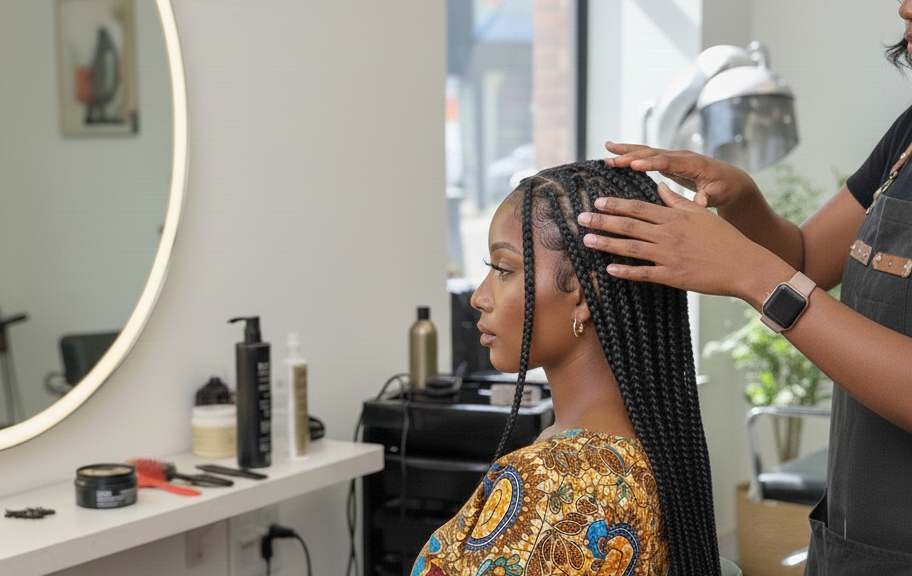
Protective styles are meant to protect your hair. Not punish your scalp.
Pain is not the price of good hair
Let’s be clear. Pain is not normal. Not on day one, not on day three, not ever.
That soreness, burning, pulling feeling is your scalp telling you something is wrong. Over time, repeated tension from tight styles can lead to traction alopecia, a type of hair loss that usually starts around the edges and temples.
And once those follicles are damaged for long enough, they don’t always bounce back.
That’s why catching tension early matters.
Early signs your style is doing too much
Your hair usually tells you very quickly when something isn’t right. Pay attention if, within the first couple of days, you notice:
- Pain around your hairline or crown
- Tiny bumps or irritation near your edges
- A constant tight or burning feeling
- Headaches that did not exist before the appointment
- Your edges already looking stressed
Quick check: if you can’t comfortably move your scalp or raise your eyebrows, the style is too tight.
Protective styles can still be cute and safe
You don’t need to swear off braids, twists, loc styles, or weaves. You just need to be smarter about how they’re done.
Ask for a looser hairline
The front does not need to be snatched to look neat. A good stylist knows how to create a clean finish without gripping your edges.
If it hurts, say something. A respectful stylist will listen.
Go lighter, not tighter
Smaller braids and heavier extensions put more strain on your scalp. Thicker parts, lighter hair, and slightly shorter lengths can make a big difference.
Time matters
If your scalp still feels stressed after the first week, that is not a “wait it out” situation. That is your cue to loosen or take the style down earlier.
Still take care of your scalp
Protective does not mean ignore. Cleanse your scalp gently, moisturise lightly, and avoid heavy buildup that leads to itching and scratching.
If your hair is already screaming
If you are already in pain, you do not have to power through.
Your options:
- Go back and ask for the hairline to be loosened
- Redo the perimeter sections yourself if possible
- Avoid slick backs or high tension styling on top
- Take the style down if the pain or bumps don’t settle
Protecting your edges now is better than trying to regrow them later.
When it’s time to speak to a professional
If you start noticing thinning edges, patchy hair loss, ongoing scalp pain, or inflammation that does not calm down, it is worth speaking to a GP or dermatologist.
Early support matters. Traction-related hair loss is much easier to manage early than once it has progressed.
Booking smarter with Combly
Finding a stylist isn’t just about how good the hair looks on the day. It’s about how your hair looks months later.
When browsing stylists, look for:
- Neat work without aggressively pulled edges
- Clients whose hairlines still look healthy over time
- Stylists who talk about scalp care and comfort
- Someone who listens when you say “that’s too tight”
Your hair deserves care, not compromise.
Personalised hair guidance
Start with a quick assessment, then chat with Kora for advice built around your texture and goals.


